
Tactical Hunting Rifles Explained: What Makes a Rifle Truly “Tactical” in the Field?
Walk into any hunting store. Or just scroll online for a few minutes. You’ll see the word “tactical” everywhere. Rifles, optics, even small accessories. It sounds serious. Looks impressive. But what does it actually mean when you’re out in the field?
Not marketing talk. Real use. Real conditions. That’s what matters here.
The term “tactical” originally comes from military and law enforcement use. Situations where things change fast. You don’t get time to think too much. You adjust, you act. Hunters started adopting the same concept because, honestly, hunting isn’t predictable either. Weather shifts. Light drops. Targets move. You either adapt… or you miss.
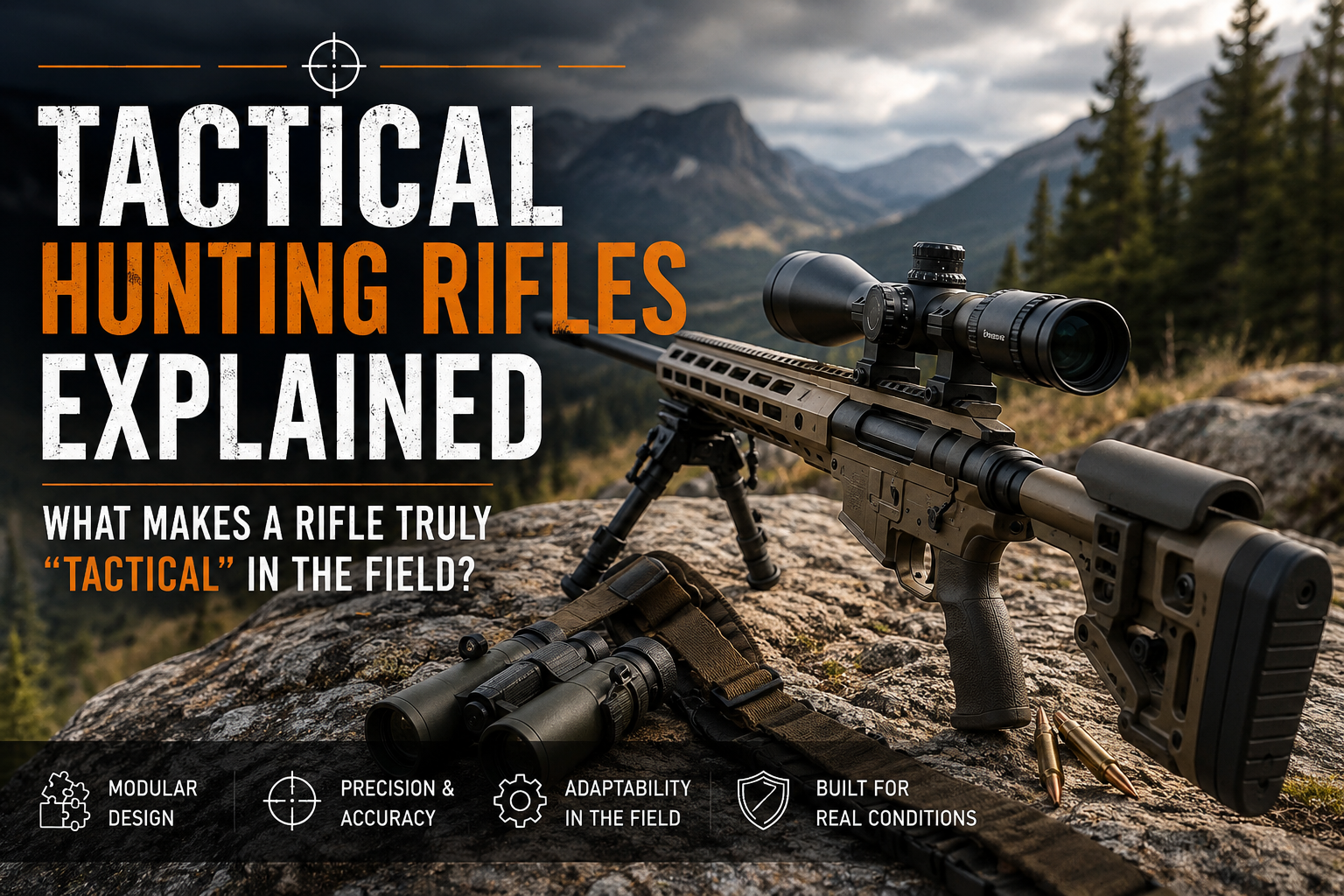
At its core, a tactical rifle is built for function. Not just looks. Not hype. It focuses on adaptability, precision, and control. Simple idea. But important.
Now, if you compare a tactical rifle with a traditional hunting rifle, the difference becomes clearer. Traditional rifles are usually lightweight, simple, and fixed in design. They are great for long walks and straightforward hunts. No complications. Just pick, aim, shoot.
Tactical rifles feel different. A bit heavier. More structured. They come with modular features, which means you can adjust or replace parts depending on your need. It’s less about carrying comfort and more about performance when it matters most. Not better or worse. Just built for a different purpose.
One of the biggest things that makes a rifle “tactical” is its modular design. Think of it like a system you can tweak. Stocks, grips, rails. You can change things based on your hunting style or environment. One setup may work in open terrain, another in rough conditions. That flexibility helps more than people expect.
Then comes the adjustable stock. Sounds like a small feature, but it changes everything. You can adjust the length and cheek position so the rifle fits your body properly. A better fit means better control. Better control means better accuracy. It’s not complicated. Just often ignored.
Precision is another key part. Tactical rifles usually come with heavier, free-floating barrels. This reduces vibration and improves consistency. So when you take a shot, especially at a longer distance, it behaves more predictably. And in hunting, predictability is valuable.
Optics also play a big role. Tactical rifles are designed to support scopes and other sighting systems easily. Most come with rails, so you’re not limited. You can choose what works best for your environment. Low light, long range, different terrain… your setup can adapt.
The trigger system is something people don’t talk about much, but it matters. Tactical rifles often have smoother, more predictable triggers. You don’t fight the pull. You control it. That small difference can affect your shot more than you think.
Durability is another factor. Field conditions are not always friendly. There’s mud, dust, rain, sometimes extreme cold. Tactical rifles are built to handle these situations. They’re not delicate. They’re meant to keep working when conditions are not ideal.
Now the real question. Does all this actually help in hunting?
Sometimes, yes. Sometimes, not really.
If you are hunting in open areas or taking longer shots, tactical features can make a noticeable difference. Better stability, improved accuracy, more control. It all adds up. But if you’re hunting in dense woods or taking short-range shots, you might not need all these features. A simple rifle can do the job just fine.
There are also a few common misconceptions. Many people think “tactical” means more powerful. That’s not true. Power depends on the caliber, not the label. Others believe tactical rifles are only for professionals. Again, not true. Anyone can use them, though they might feel a bit complex at first. And no, they are not always better. Sometimes they’re heavier and more than what you actually need.
So when should you consider a tactical hunting rifle?
If you prefer longer distance shooting, like customizing your setup, or hunt in different environments where conditions change often, then it might make sense. But if your hunting style is simple and consistent, you may not need all that extra.
Imagine a quick scenario. Early morning. Slight fog. Open land. You spot movement far away. Not close enough for a casual shot. You settle in. Adjust your position. Your rifle fits properly. Everything feels aligned. You take the shot. Clean and controlled.
That’s where tactical features quietly help. Not flashy. Not loud. Just effective.
In the end, “tactical” is not just a buzzword, even though it’s often used like one. It simply means adaptability, precision, and control. Nothing more. Nothing less.
For some hunters, it can improve performance. For others, it’s unnecessary. The key is understanding your own needs. Not what looks impressive. Not what sounds advanced. Just what works when you’re actually out there.
FAQs
What is a tactical hunting rifle?
A tactical hunting rifle is designed with features like modular parts, adjustable components, and precision-focused build to adapt to different field conditions. It’s more about control and flexibility than appearance.
Are tactical rifles better than traditional hunting rifles?
Not always. It depends on your hunting style. Tactical rifles offer more customization and stability, but traditional rifles are lighter and simpler, which can be better in certain situations.
Do tactical rifles improve accuracy?
They can help improve accuracy, especially because of better ergonomics, stable barrels, and cleaner triggers. But skill still matters more than equipment.
Are tactical rifles good for beginners?
They can be used by beginners, but may feel slightly complex at first. Many new hunters prefer starting with simpler rifles before moving to tactical setups.
Why are tactical rifles heavier?
They often use heavier barrels and additional components for stability and durability. This added weight helps with control but can make them less comfortable to carry for long periods.
Can you use a tactical rifle for all types of hunting?
Yes, but it might not always be necessary. For short-range or dense forest hunting, a simpler rifle can be more practical. Tactical rifles are more useful in open terrain and long-range scenarios.